Are you dealing with mysterious water stains on interior walls, persistent mold complaints from tenants, or unexplained corrosion in your commercial building’s structure?
Has troubleshooting curtain walls, storefronts, or windows left you frustrated with temporary patches that fail during the next storm?
These leaks don’t just annoy—they erode your building’s value, safety, and profitability.
Your challenge with leaks
Leaks in the building envelope often stem from failed seals, movement gaps, or hidden pathways that standard inspections miss.
Unchecked, they corrode steel anchors, rot framing, and spawn mold, turning minor defects into costly liabilities for owners and managers.
The solution starts with replicating those leaks under controlled conditions to reveal the true root cause.
AAMA 501.2 hose testing as your diagnostic tool
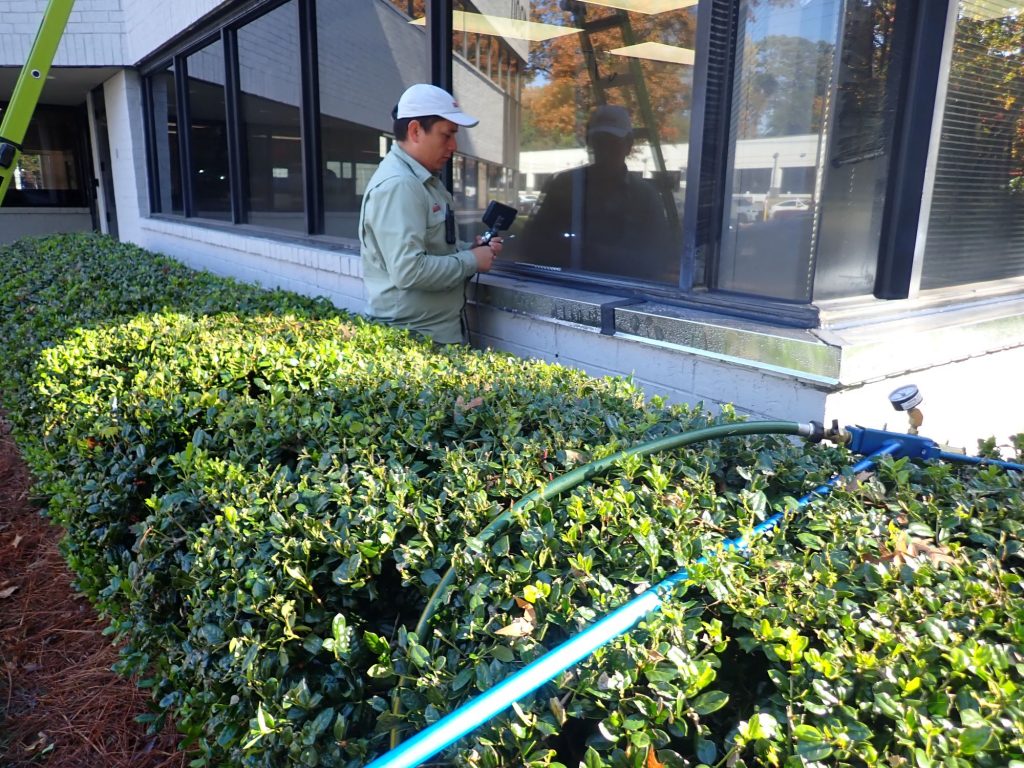
AAMA 501.2 provides a standardized field hose test tailored for installed curtain walls, storefronts, and glazing systems. This test method is often used for all components of the building envelope to locate leaks.
A calibrated nozzle delivers 30–35 psi spray from 1 foot away, methodically tracing joints, perimeters, and interfaces for 5 minutes per section while observers inside track water paths.
This process duplicates storm-like conditions, showing exactly where water breaches the envelope and how it travels to interior damage points.
Tracing paths to root causes
Targeted hose testing maps leaks from entry to manifestation, distinguishing surface fixes from deeper fixes like joint redesign or flashing additions.
Common revelations include discontinuous perimeter sealants, gasket failures, inadequate sills, or movement exceeding design tolerances, and incomplete internal drains and flashing. With paths confirmed, repairs focus on durable solutions—validated by retesting the same assembly.
Integrated water intrusion engineering for lasting results
Structural and envelope expertise together uncovers interactions between cladding, anchors, and the superstructure that isolated inspections overlook. Tools like infrared thermography, borescopes, probing, and drone access enhance hose testing, providing comprehensive evidence for informed repair decisions.
This approach delivers defensible reports, accurate cost estimates, and strategies that restore performance without ongoing surprises.
Why this works for your building
Owners facing chronic leaks—persisting years after occupancy—benefit from this methodical replication and analysis, turning vague complaints into targeted, verified fixes. The result: a secure envelope that withstands weather, minimizes downtime, and preserves asset value long-term.
Ready to end the leak cycle? Contact us for a no-obligation water intrusion engineering consultation. Let’s pinpoint the problem and build a watertight solution for your property today.